

It often starts with something that seems harmless.
You notice a little pain in your ear after a cold. Maybe your ear feels blocked after swimming. Or perhaps you notice a small amount of liquid coming from the ear. You may think, “It will probably get better on its own.”
Sometimes it does. But when symptoms continue, become worse, or start affecting your hearing and balance, ignoring them may not be the best approach.
Your ears are responsible for much more than hearing. They are also closely connected with balance and communication. Persistent ear problems can interfere with work, sleep, conversations, and everyday activities.
If you are experiencing ongoing ear symptoms, consulting a Best Ear Treatment Doctor can help identify the possible cause and determine what type of treatment or further evaluation may be appropriate.
Ear Pain: When Should You Take It Seriously?
Ear pain can happen for many reasons. Ear infections, wax buildup, inflammation, injury, and other conditions can cause discomfort.
Imagine waking up one morning with a mild earache. You continue your normal routine, expecting it to disappear. The next day, the pain is still there. Then you notice that sounds seem slightly muffled.
This is when it is better not to keep guessing.
A Best Ear Treatment Doctor can examine the ear and determine whether the symptoms are related to an infection, blockage, inflammation, or another condition.
Persistent or severe pain, especially when accompanied by fever, discharge, hearing changes, or dizziness, deserves medical attention.
Ear Discharge: Why Is Liquid Coming From My Ear?
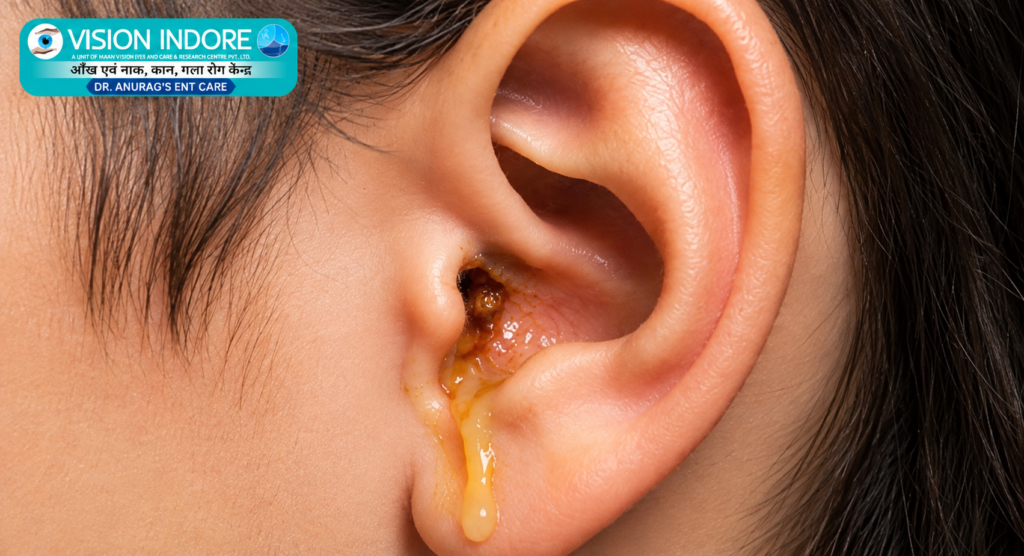
Finding fluid coming from your ear can be worrying.
Ear discharge can have different causes. It may occur with an ear infection or another ear condition. The discharge may also appear different depending on its cause.
Vision Indore specifically provides evaluation and treatment for ear discharge and ear infections.
One important mistake to avoid is putting random drops or household substances inside the ear without knowing the cause.
If discharge continues, returns repeatedly, has an unusual smell, or is associated with pain or hearing difficulty, an ENT evaluation can help determine what is happening.
A Best Ear Treatment Doctor focuses on finding the underlying cause rather than simply treating the visible discharge.
Hearing Loss Should Never Be Dismissed
Have you started increasing the television volume?
Do you frequently ask people to repeat themselves?
Do conversations become difficult to understand when several people are speaking at once?
These may be signs of hearing difficulty.
Hearing loss can have different causes, including earwax buildup, infections, noise exposure, age-related changes, and inner-ear conditions. The appropriate treatment depends on the underlying cause.
Vision Indore offers hearing-loss evaluation as part of its ear-care services.
If you notice a sudden change in hearing, seek medical attention promptly rather than waiting for it to disappear.
A Blocked or Full Feeling in the Ear

Sometimes an ear can feel as though it is “closed.”
You may hear your own voice differently, experience muffled sounds, or feel pressure inside the ear.
Wax buildup can sometimes cause this sensation, but there are other possible causes as well.
Instead of using earbuds, pins, or other objects to clean the ear, it is safer to have the ear properly examined.
A Best Ear Treatment Doctor can determine whether the sensation is related to wax, infection, pressure changes, or another ear condition.
Ringing, Buzzing or Other Sounds in the Ear
Have you ever been in a quiet room and suddenly noticed ringing or buzzing in your ear?
Occasional ringing may be temporary, but persistent tinnitus can become frustrating and distracting.
It may interfere with concentration, sleep, and everyday communication. Tinnitus can have different underlying causes, so persistent symptoms should be discussed with a qualified ENT specialist.
Vision Indore lists tinnitus evaluation and treatment among its ear-care services.
If ringing is accompanied by hearing loss, dizziness, ear pressure, or other symptoms, professional evaluation is particularly important.
Dizziness and Balance Problems Can Be Ear-Related
Not every dizziness problem comes from the ear, but the inner ear plays an important role in maintaining balance.
This is why some people with ear-related conditions may experience vertigo, dizziness, or difficulty maintaining balance.
Vision Indore has a dedicated Vertigo & Balance Clinic and provides evaluation of ear-related balance disorders.
If dizziness repeatedly occurs with hearing changes, ringing, ear pressure, or other ear symptoms, an ENT specialist can assess whether the ear may be contributing to the problem.
When Should You Visit a Best Ear Treatment Doctor?
You should consider an ENT consultation if you experience:
- Persistent or severe ear pain
- Fluid or pus coming from the ear
- Sudden or noticeable hearing changes
- Persistent ringing or buzzing
- Repeated ear infections
- A blocked or pressured feeling in the ear
- Dizziness or vertigo associated with ear symptoms
- Difficulty maintaining balance
- Ear symptoms that keep returning
These symptoms do not automatically mean you have a serious condition. However, they are reasons to get an appropriate medical evaluation rather than relying only on home remedies.
How Can a Best Ear Treatment Doctor Help?

Your consultation usually begins with a discussion about your symptoms.
The doctor may ask when the problem started, whether it is getting worse, whether you have experienced infections recently, and whether your hearing or balance has changed.
An ear examination can then help identify possible causes. Depending on the symptoms, additional hearing or diagnostic tests may be recommended.
At Vision Indore, ear care includes evaluation and management of infections, hearing loss, tinnitus, ear discharge, and chronic ear conditions.
Dr. Anurag Manoj Srivastava is listed by Vision Indore as a senior ENT Surgeon and Head & Neck Specialist with more than 15 years of clinical and academic experience, with areas of interest including neuro-otology, vertigo and balance disorders, and comprehensive ENT care.
What Should You Avoid When You Have Ear Problems?
While waiting for a medical appointment, avoid making the problem worse.
Do not insert cotton buds, pins, keys, or other objects deep inside the ear. Avoid using someone else’s ear drops or taking antibiotics without medical advice.
If there is discharge, keep the outer ear clean and dry, but avoid trying to clean deep inside the ear canal.
Most importantly, do not ignore symptoms simply because the pain is mild.
Why Early Ear Evaluation Matters
Consider two people with similar symptoms.
One person waits for weeks, repeatedly using home remedies whenever the discomfort returns. The other gets the ear examined when the symptoms persist.
The second approach provides an opportunity to understand what is actually causing the problem.
Not every ear problem requires surgery or complicated treatment. Some conditions may be managed with simple measures, while others may require medication, hearing evaluation, procedures, or specialist care depending on the diagnosis.
The important first step is knowing what you are dealing with.
Choosing the Right Ear Specialist
When searching online for a Best Ear Treatment Doctor, don’t choose a doctor only because a website or search result uses the word “best.”
Instead, look at relevant qualifications, ENT experience, areas of expertise, available diagnostic facilities, treatment options, clinic location, and patient feedback.
For patients in Indore, Vision Indore provides dedicated ear and ENT services, including ear infection treatment, hearing-loss evaluation, tinnitus care, earwax management, ear-discharge evaluation, and balance-related care.
The clinic is located on Kanadia Main Road near Sai Mandir in Indore.
Final Thoughts
Ear pain, discharge, hearing loss, ringing, blockage, dizziness, and balance problems should not automatically be dismissed as minor issues.
Sometimes the cause is simple and treatable. Sometimes further investigation is necessary. The only way to understand the difference is through appropriate medical evaluation.
If you have persistent or recurring symptoms, consulting a qualified Best Ear Treatment Doctor can help you understand the possible cause and explore suitable treatment options.
Your ears help you communicate, work, enjoy conversations, and stay connected with the world around you. Giving them the attention they deserve can be an important part of protecting your hearing and overall quality of life.
Frequently Asked Questions
1. When should I visit a Best Ear Treatment Doctor?
Consider consulting an ENT doctor if you have persistent ear pain, discharge, hearing changes, tinnitus, repeated infections, blockage, dizziness, or balance problems.
2. Is ear discharge always caused by an infection?
No. Ear discharge can have different causes. An examination is needed to identify the underlying reason.
3. Can earwax cause hearing loss?
Yes. Excessive earwax can block the ear canal and cause muffled or reduced hearing. A doctor can determine whether wax is responsible.
4. Is sudden hearing loss an emergency?
A sudden noticeable change in hearing should be evaluated promptly by a medical professional. Do not wait several days hoping that it will resolve by itself.
5. Can I use cotton buds to clean my ears?
It is better to avoid inserting cotton buds or other objects deep into the ear canal. They can push wax deeper or potentially injure the ear.
6. What causes ringing or buzzing in the ear?
Ringing or buzzing, commonly called tinnitus, can have several possible causes. Persistent tinnitus should be discussed with a qualified ENT specialist.
7. Can ear problems cause dizziness?
Some inner-ear conditions can affect the body’s balance system and contribute to dizziness or vertigo. An ENT evaluation can help determine whether the ear is involved.
8. How do I choose a Best Ear Treatment Doctor?
Look at the doctor’s ENT qualifications, relevant experience, areas of expertise, diagnostic facilities, treatment approach, and patient feedback. Choose a specialist whose experience matches your specific concern.


