Sinus congestion can make everyday activities uncomfortable. A blocked nose, facial pressure, thick mucus, headache, and difficulty breathing through the nose are common symptoms associated with sinus problems. Many people searching for the Best ENT Specialist in Indore also want to know which option can provide quick relief from nasal blockage.
Decongestants, saline sprays, saline rinses, and other nasal treatments may help depending on the underlying cause. However, there is no single option that is best for everyone. The right treatment depends on whether congestion is related to a viral infection, allergies, chronic sinusitis, or another nasal condition.
What Causes Sinus Congestion?
Sinus congestion occurs when the tissues inside the nose and sinuses become swollen. Mucus may not drain normally, creating a feeling of pressure and blockage. Best ENT Specialist in Indore: Sinus Decongestant Guide
Common causes include:
- Common cold or viral infection
- Allergies
- Sinusitis
- Nasal polyps
- Deviated nasal septum
- Exposure to dust and pollutants
- Environmental irritants
If congestion continues or repeatedly returns, consulting the Best ENT Specialist in Indore can help identify the underlying cause rather than simply treating the symptom.
What Is a Decongestant?
Decongestants are medicines designed to temporarily reduce swelling in the nasal passages, helping improve airflow. They are available in different forms, including tablets, liquids, and nasal sprays. Best ENT Specialist in Indore: Sinus Decongestant Guide
Nasal decongestant sprays can work quickly, while oral decongestants may provide relief from congestion throughout the body. However, these medicines are not appropriate for everyone and should be used according to medical or label instructions.
Nasal Decongestant Sprays
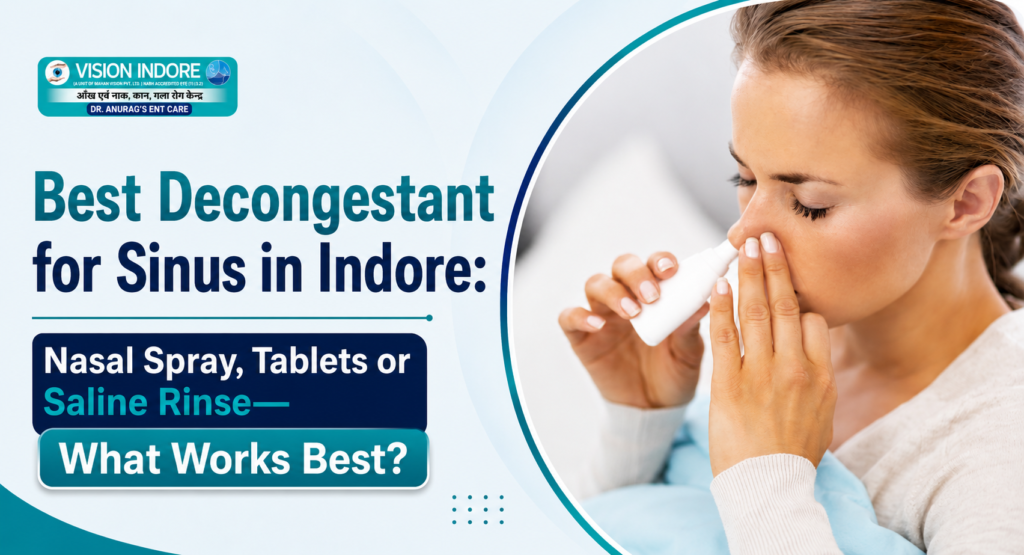
Nasal decongestant sprays can provide rapid, short-term relief from a blocked nose. They work by reducing swelling in blood vessels inside the nasal passages.
Although they can be useful for temporary congestion, prolonged use can cause rebound congestion, where nasal blockage becomes worse after the medicine wears off. Mayo Clinic recommends using nasal decongestants for only a few days.
Therefore, if you frequently need a decongestant spray, it is better to consult the Best ENT Specialist in Indore instead of continuing self-medication.
Oral Decongestants
Oral decongestants are available as tablets or liquids and may temporarily reduce nasal and sinus congestion. However, they can cause side effects such as increased blood pressure, difficulty sleeping, headache, and irritability.
People with certain medical conditions, including high blood pressure or heart disease, may need to avoid or carefully manage these medicines. Pregnant individuals should also seek professional medical advice before using them.
A consultation with the Best ENT Specialist in Indore can help determine whether a decongestant is appropriate for your symptoms.
Can Saline Rinse Help?
Saline nasal sprays and rinses are commonly used to clear mucus and improve nasal comfort. Unlike medicated decongestant sprays, saline solutions do not work by shrinking blood vessels. Instead, they help rinse the nasal passages and loosen thick secretions.
Mayo Clinic lists saline nasal sprays and rinses among measures that may help ease sinus symptoms.
For people experiencing recurring congestion, saline irrigation may be useful as part of an overall nasal-care routine, provided it is used correctly.
What About Steroid Nasal Sprays?
Nasal corticosteroid sprays are different from traditional decongestant sprays. They reduce inflammation and are commonly used for conditions involving nasal inflammation, including certain forms of chronic sinusitis and allergies.
They are not intended to provide the same immediate effect as a topical decongestant. An ENT specialist may recommend them when inflammation or allergies are contributing to persistent nasal symptoms.
Which Option Is Best for Sinus Congestion?
There is no universal “best” decongestant. A short-term nasal decongestant may be useful for some people, while saline irrigation or an anti-inflammatory nasal treatment may be more appropriate for others.
The underlying cause matters. For example, congestion associated with allergies may require allergy management, while persistent symptoms caused by structural problems may require an ENT evaluation.
This is why speaking with the Best ENT Specialist in Indore can be more useful than repeatedly trying different over-the-counter medicines.

When Should You See an ENT Specialist?
Occasional congestion associated with a cold often improves on its own. However, medical evaluation is advisable when symptoms persist, become severe, or repeatedly return.
Adults should seek professional evaluation if nasal congestion lasts more than 10 days, is accompanied by high fever, facial pain, or concerning nasal discharge, according to Mayo Clinic guidance.
An ENT consultation can include examination of the nose and throat and, when necessary, additional investigations to determine why symptoms are continuing.
The Best ENT Specialist in Indore can help distinguish simple congestion from chronic sinusitis, allergies, nasal polyps, or structural nasal problems.
How to Get Better Results From Sinus Treatment
Along with appropriate treatment, several simple measures may help manage congestion:
- Drink adequate fluids.
- Avoid cigarette smoke and other irritants.
- Manage known allergies.
- Follow prescribed nasal treatments correctly.
- Use saline rinses as directed.
- Avoid prolonged use of medicated decongestant sprays.
If symptoms repeatedly return despite these measures, visiting the Best ENT Specialist in Indore can help you receive a diagnosis-based treatment plan.
Conclusion
Choosing the right treatment for sinus congestion depends on the cause, severity, duration, and your overall health. Nasal decongestant sprays may provide quick temporary relief, oral decongestants may help selected patients, and saline sprays or rinses can help clear mucus and support nasal comfort. However, prolonged or inappropriate use of decongestants can create additional problems such as rebound congestion.
If your sinus congestion is persistent, recurrent, or affecting your quality of life, consulting the Best ENT Specialist in Indore can help identify the underlying problem and determine an appropriate treatment approach. Instead of relying on one “best” decongestant for every situation, professional evaluation can help ensure that your sinus care is safe, targeted, and suited to your individual needs.
Frequently Asked Questions
1. What is the best decongestant for sinus congestion?
There is no single best option for everyone. The appropriate treatment depends on the cause of congestion and your medical history.
2. Can I use a nasal decongestant spray every day?
Medicated nasal decongestant sprays should generally only be used for a short period because prolonged use can cause rebound congestion.
3. Is saline rinse useful for sinus congestion?
Yes. Saline sprays and rinses can help clear mucus and support drainage.
4. When should I consult an ENT doctor?
If congestion lasts more than 10 days, keeps returning, becomes severe, or occurs with significant facial pain or fever, seek professional evaluation.
5. How can I find the Best ENT Specialist in Indore?
Look for an experienced ENT doctor who provides proper diagnosis, evaluates the underlying cause of sinus symptoms, and recommends treatment based on your individual condition.