Allergic rhinitis is one of the most common conditions affecting people of all age groups. Often referred to as nasal allergy, this condition can cause constant sneezing, nasal congestion, irritation, and discomfort that affects daily life. In some cases, people with allergic rhinitis may also experience frequent nose bleeds, which can become concerning if ignored. If you are searching for the best ENT specialist in Indore, understanding the connection between allergies and nose bleeds can help you seek timely treatment and prevent complications.
Allergic rhinitis occurs when the immune system overreacts to substances such as dust mites, pollen, mold, smoke, or pet dander. These allergens trigger inflammation inside the nose, causing irritation and excessive mucus production. Repeated inflammation and dryness in the nasal passages may weaken the delicate blood vessels inside the nose, increasing the chances of bleeding.
With proper diagnosis and Best ENT Specialist in Indore, allergic rhinitis and associated nose bleeds can be effectively managed.
What Is Allergic Rhinitis?
Allergic rhinitis is an allergic reaction that affects the nasal passages. It develops when the immune system identifies harmless substances like dust or pollen as harmful and releases chemicals such as histamine in response. This reaction causes swelling, irritation, and increased mucus production in the nose.
The condition may occur seasonally due to pollen exposure or throughout the year because of indoor allergens like dust mites and pet hair.
Common Triggers of Allergic Rhinitis:
- Dust mites
- Pollen
- Pet dander
- Mold
- Smoke and pollution
- Strong fragrances or chemicals
People with allergies often experience recurring symptoms that may interfere with sleep, concentration, and breathing comfort.
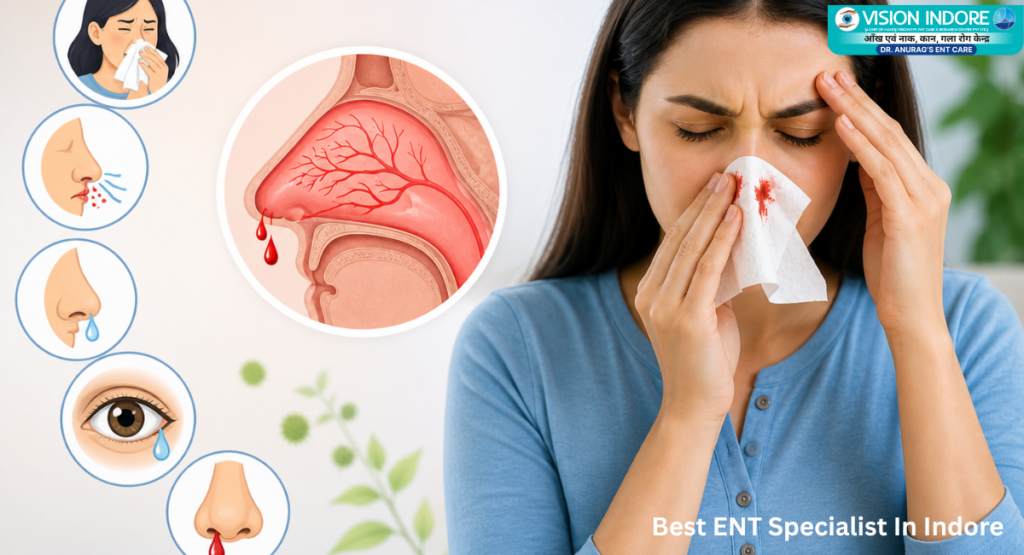
Why Allergic Rhinitis Can Lead to Nose Bleeds
The nasal lining contains many tiny blood vessels that can become sensitive and fragile due to ongoing inflammation. Frequent sneezing, rubbing the nose, or constant irritation caused by allergies may damage these blood vessels, leading to nose bleeds.
Additionally, allergic rhinitis often causes nasal dryness and congestion. Many people also use nasal sprays or medications that may further dry the nasal lining if not used correctly.
Common Reasons for Nose Bleeds in Allergic Rhinitis:
- Constant nose rubbing or blowing
- Dryness inside the nose
- Inflamed nasal tissues
- Repeated sneezing
- Overuse of nasal sprays
- Environmental dryness or pollution
Consulting the best ENT specialist in Indore can help identify the exact cause of recurring nose bleeds and provide the right treatment approach.
Symptoms: What Is Normal and What Is Not
People with allergic rhinitis and nose bleeds may experience common allergy symptoms along with mild or occasional bleeding from the nose. However, severe or repeated bleeding should never be ignored.
Typical Allergic Rhinitis Symptoms:
- Sneezing bouts
- Itchy nose
- Watery or runny nose
- Nasal congestion
- Itchy or watery eyes
- Postnasal drip with throat clearing
Symptoms That Need Medical Attention:
- Frequent nose bleeds
- Heavy bleeding from the nose
- Difficulty breathing
- Persistent nasal blockage
- Facial pain or pressure
- Symptoms affecting sleep or daily activities
Early diagnosis can help prevent worsening symptoms and improve overall nasal health.
How Allergic Rhinitis Is Diagnosed
Diagnosis begins with a detailed evaluation of symptoms, medical history, and allergy triggers. ENT specialists may also examine the inside of the nose to identify inflammation, swelling, infection, or bleeding points.
Diagnostic Methods May Include:
- Nasal examination
- Allergy assessment
- Endoscopy if required
- Sinus evaluation
- Review of environmental triggers
Proper diagnosis helps determine whether symptoms are caused by allergies, sinus infections, or other nasal conditions.

Treatment Options for Allergic Rhinitis and Nose Bleeds
Treatment focuses on reducing allergy symptoms, controlling inflammation, and preventing further nose bleeds. Depending on the severity of symptoms, doctors may recommend a combination of medications, lifestyle changes, and preventive care.
1. Allergy Management
Avoiding known allergens can help reduce flare-ups and nasal irritation.
2. Medications
Doctors may prescribe antihistamines, nasal sprays, or decongestants to control allergy symptoms and improve breathing.
3. Nasal Moisturization
Keeping the nasal lining hydrated can help reduce dryness and bleeding.
4. Treatment for Nose Bleeds
If bleeding occurs frequently, ENT specialists may identify and treat damaged blood vessels inside the nose.
5. Lifestyle Modifications
Using air purifiers, maintaining hygiene, and avoiding smoke exposure may help reduce allergy triggers.
Seeking treatment from the best ENT specialist in Indore can help patients receive personalized care for long-term relief.
Tips to Prevent Allergic Rhinitis and Nose Bleeds
Simple precautions can help reduce allergy symptoms and protect the nasal lining from irritation.
Helpful Prevention Tips:
- Stay hydrated
- Avoid allergy triggers
- Use saline nasal sprays if advised
- Avoid excessive nose rubbing
- Keep indoor air clean
- Use a humidifier during dry weather
- Follow prescribed medications properly
Maintaining proper nasal care can help minimize discomfort and prevent repeated bleeding episodes.
When Should You Visit an ENT Specialist?
While mild allergy symptoms may improve with basic care, persistent nasal congestion or repeated nose bleeds should always be evaluated by a specialist.
Consult an ENT Specialist If You Have:
- Frequent or heavy nose bleeds
- Chronic nasal congestion
- Severe allergy symptoms
- Difficulty breathing through the nose
- Recurrent sinus infections
- Persistent throat irritation from postnasal drip
Timely treatment can help prevent complications and improve overall quality of life.
Importance of Expert ENT Care
Chronic allergies and untreated nasal inflammation can affect breathing, sleep quality, and overall comfort. Expert ENT care ensures proper diagnosis and personalized treatment for both allergies and nose-related concerns.
Experienced specialists use advanced diagnostic techniques to identify the underlying cause and recommend effective treatment plans based on individual symptoms and medical history.
Conclusion
Allergic rhinitis is more than just seasonal sneezing or nasal irritation. In some cases, ongoing inflammation and dryness can lead to recurring nose bleeds and other complications if left untreated. Understanding the symptoms and causes of allergic rhinitis can help individuals seek timely medical care and prevent worsening problems.
If you are looking for the best ENT specialist in Indore, early diagnosis and proper treatment can help manage allergies, reduce nose bleeds, and improve your overall nasal health.