Contact Lens Users: 7 Eye Care Mistakes You Should Avoid
Contact lenses offer freedom from glasses and provide clear, comfortable vision for millions of people worldwide. However, improper contact lens habits can lead to serious eye problems, including infections, irritation, and long-term vision damage. Many contact lens users unknowingly make small mistakes in their daily routines that can negatively affect their eye health over time. In some cases, repeated issues may even push people to explore alternatives such as laser eye treatment, making prevention and proper care even more important.
If you wear contact lenses or are considering them, understanding these common eye care mistakes can help protect your vision and keep your eyes healthy for years to come.
Why Proper Contact Lens Care Matters
Your eyes are extremely sensitive organs. Contact lenses sit directly on the eye’s surface, which means even minor hygiene lapses can allow bacteria, fungi, or debris to enter the eye. Poor lens care can result in dryness, redness, blurred vision, and painful infections like keratitis. Many people only realize the seriousness of these issues when discomfort becomes constant or vision begins to suffer.
While advanced solutions such as laser eye treatment exist for vision correction, prevention remains the best approach. Maintaining good contact lens hygiene reduces the risk of complications and preserves overall eye health.
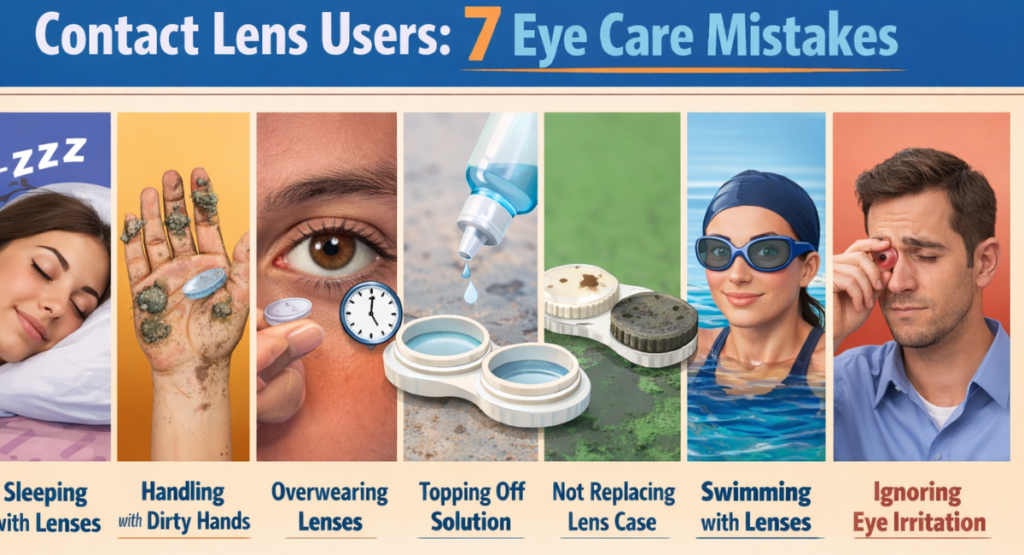
Mistake 1: Sleeping with Contact Lenses On
One of the most common and dangerous mistakes contact lens users make is sleeping while wearing their lenses. Even if the lenses feel comfortable, sleeping in them significantly increases the risk of eye infections.
When your eyes are closed, oxygen supply to the cornea decreases. Contact lenses further reduce oxygen flow, creating a breeding ground for bacteria. This can lead to redness, pain, light sensitivity, and even corneal ulcers.
What to do instead:
Always remove your contact lenses before sleeping unless your eye doctor has specifically prescribed extended-wear lenses and given clear instructions for their use.
Mistake 2: Poor Hand Hygiene Before Handling Lenses
Touching contact lenses with unwashed hands introduces germs directly into your eyes. Many users rinse their hands quickly or skip washing altogether, especially when they are in a hurry.
This habit can transfer dirt, oils, and harmful microorganisms to the lens surface, increasing the risk of infection and irritation.
What to do instead:
Wash your hands thoroughly with soap and water before handling contact lenses. Dry them with a lint-free towel to prevent fibers from sticking to the lenses.
Mistake 3: Overusing Contact Lenses Beyond Their Schedule
Contact lenses are designed for specific usage periods—daily, bi-weekly, or monthly. Wearing lenses longer than recommended can cause protein deposits and bacteria to build up, even if the lenses appear clean.
Overuse reduces oxygen flow to the eyes and can worsen dryness, redness, and blurred vision. Chronic misuse may damage the cornea and affect long-term eye health, sometimes prompting people to consider permanent solutions like laser eye treatment earlier than expected.
What to do instead:
Follow the replacement schedule exactly as prescribed. Set reminders if necessary, and never stretch lens usage to save money.
Mistake 4: Using Water or Saliva to Clean Lenses
Some contact lens users rinse lenses with tap water or saliva when lens solution is unavailable. This is extremely dangerous. Tap water can contain microorganisms, including Acanthamoeba, which can cause severe and painful eye infections.
Saliva is also full of bacteria and enzymes that can damage lenses and irritate the eyes.
What to do instead:
Always use sterile contact lens solution recommended by your eye care professional. Never expose lenses to water, including swimming pools, showers, or hot tubs.
Mistake 5: Ignoring Eye Discomfort and Redness
Many people continue wearing contact lenses despite experiencing burning, itching, or redness, assuming the symptoms will resolve on their own. Ignoring these warning signs can worsen underlying problems and lead to serious complications.
Persistent discomfort may indicate dryness, infection, or improper lens fit. Long-term irritation can cause scarring or vision changes that may require medical intervention.
What to do instead:
If discomfort persists, stop wearing your lenses immediately and consult an eye doctor. Early treatment can prevent complications and help preserve your vision.
Mistake 6: Skipping Regular Eye Check-Ups
Once people get comfortable with contact lenses, they often skip routine eye exams. However, regular check-ups are essential for monitoring eye health and ensuring that your lenses still fit properly.
Changes in vision, tear production, or eye shape can occur over time, making previously comfortable lenses unsuitable. Regular exams also help detect early signs of infection or dryness before symptoms worsen.
Some individuals who experience recurring contact lens issues begin exploring alternatives such as laser eye treatment, but even then, proper evaluation and guidance from an eye specialist are crucial.
What to do instead:
Schedule regular eye exams as recommended by your eye care professional, even if your vision feels fine.
Mistake 7: Wearing Contact Lenses for Too Many Hours a Day
Wearing contact lenses for extended periods without breaks can strain the eyes and worsen dryness. Long screen time combined with contact lens wear further reduces blinking, leading to increased discomfort and fatigue.
Chronic dryness and irritation may eventually make contact lens wear intolerable for some users, pushing them toward options like laser eye treatment for long-term relief.
What to do instead:
Give your eyes regular breaks. Switch to glasses for part of the day, especially during long screen sessions or when your eyes feel tired.

Long-Term Impact of Poor Contact Lens Habits
Repeated contact lens mistakes don’t just cause temporary discomfort- they can have lasting effects on eye health. Chronic dryness, corneal damage, and recurring infections can affect vision quality and overall eye comfort.
For some people, these issues lead to reduced tolerance for contact lenses altogether. In such cases, vision correction alternatives like laser eye treatment may be considered, but eligibility depends on eye health, corneal thickness, and medical history.
Maintaining healthy contact lens habits can help delay or even eliminate the need for such interventions.
Tips for Healthy Contact Lens Use
To protect your eyes and enjoy comfortable vision:
- Always follow your eye doctor’s instructions
- Maintain strict hygiene
- Replace lenses on schedule
- Avoid water exposure
- Take breaks from lens wear
- Attend regular eye check-ups
Healthy habits not only improve comfort but also preserve long-term eye health and vision clarity.
Conclusion
Contact lenses are safe and effective when used correctly, but small mistakes can lead to significant eye problems over time. By avoiding these seven common eye care mistakes, contact lens users can protect their vision, reduce discomfort, and maintain healthy eyes.
While advanced options such as laser eye treatment are available for vision correction, prevention through proper contact lens care remains the smartest and safest approach. Paying attention to hygiene, usage habits, and regular eye check-ups can help ensure that your eyes stay comfortable, clear, and healthy for years to come.